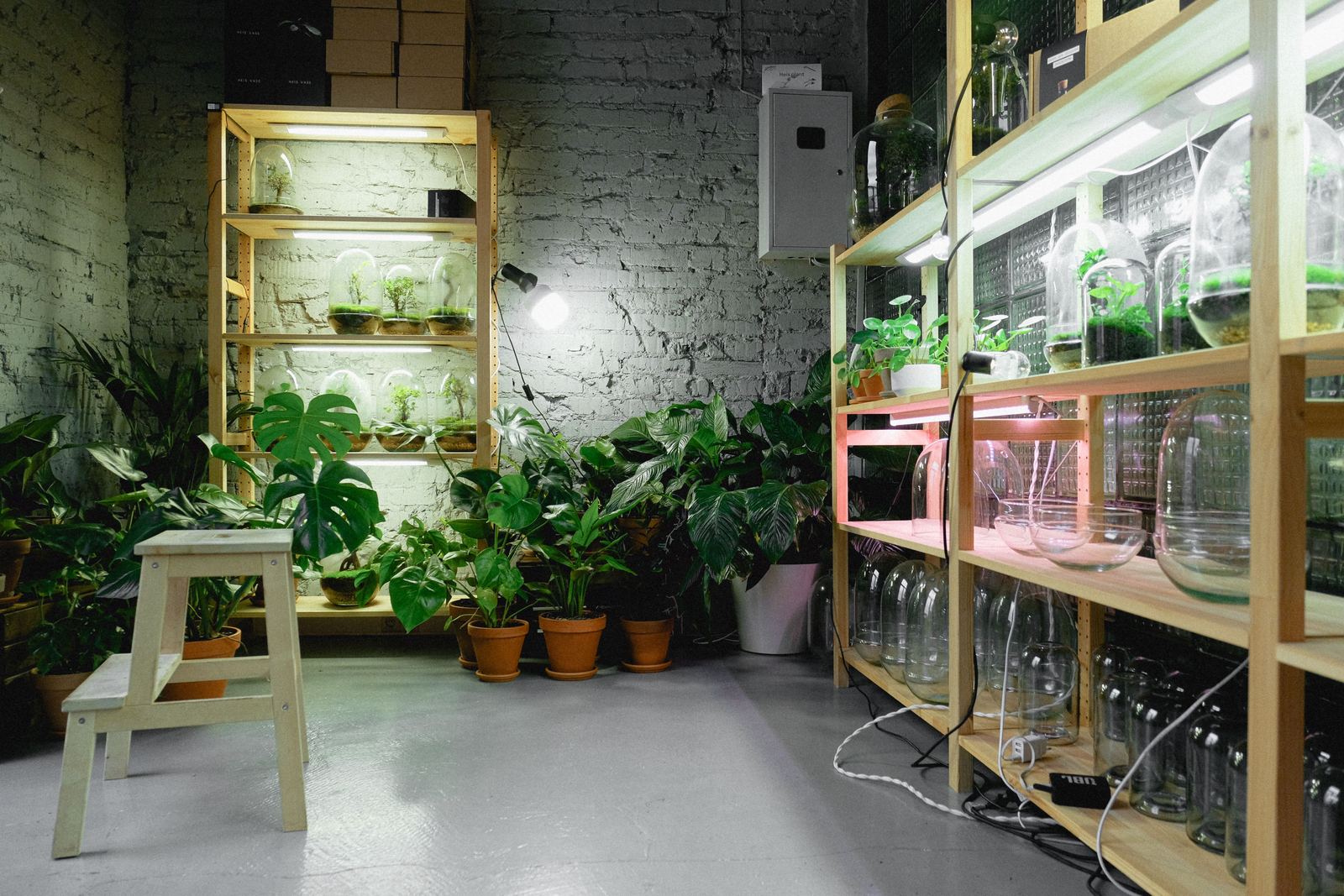
Most "low light plant" advice assumes some light — a north-facing window, a room a few feet from any window. But if your apartment has a windowless room, heavy shade from a neighboring building, or a spot that genuinely never sees daylight, even the toughest low-light plants (ZZ plants, snake plants, cast iron plants) need supplemental help. That's what a grow light is actually for — not a fix for mediocre light, but a real solution for none.
Do you actually need one?
If a spot gets any indirect daylight at all — even weak, filtered light from a north-facing window — a tough low-light plant will likely survive without one. A grow light becomes worth it when a room has no windows, when windows face directly into another building a few feet away, or when you've tried a hardy plant there and watched it decline anyway. Before you buy anything, it's worth trying one of the genuinely tough, pet-safe low-light plants in the spot first — some of them handle far less light than people expect.
Screw-in grow light bulbs
The simplest, most renter-friendly option — it screws into a lamp or fixture you likely already own, no new hardware needed. Good for a single plant near an existing lamp, though light intensity drops off quickly with distance, so it works best for plants placed close to the fixture.
Clip-on grow lights
Clips directly onto a shelf edge, headboard, or desk — no drilling, no dedicated stand. A good option for a single plant on a shelf or nightstand in an otherwise dark corner.
Tabletop panels
A freestanding panel that sits flat on a surface, angled toward a small cluster of plants — good for a windowsill-style grouping without needing an actual window. More coverage than a clip-on, still fully portable.
Floor-standing grow lights
The strongest renter-friendly option for a real plant collection — a freestanding pole or tripod light that can cover several plants at once, with zero wall or ceiling contact. Worth it if you're trying to sustain more than 2-3 plants in a genuinely dark room.
Placement and timing
As a general guide: seedlings and very young plants do best 6–12 inches from the light source, while most mature houseplants are happier 12–24 inches away — too close can scorch leaves, too far under-delivers. Pair any grow light with a simple outlet timer set for 8–12 hours a day, since consistency matters more than intensity for most houseplants.
What to actually look for when buying
Look for "full spectrum" in the description — it mimics natural daylight better than a narrow-spectrum light and works for a wider range of plants. A built-in or included timer saves you a separate purchase. And for a rental specifically, prioritize anything freestanding or clip-based over anything requiring permanent mounting — the whole point is real plant health without any wall or ceiling risk.
Leafling Plants is reader-supported. This article may contain affiliate links — if you buy through them, we may earn a commission at no extra cost to you.